
The Trench
Publication and place in the series
The Trench is a science-fiction thriller by American novelist Steve Alten, published by Kensington in 1999. It is the second novel in Alten’s Meg series, following Meg, and carries forward the premise that the prehistoric giant shark known as the megalodon has survived into the modern age. The book combines deep-sea adventure, creature horror, and fast-moving commercial suspense. Marine science and ocean exploration give the story a recognizable framework, while the enormous predator turns the unknown into an immediate physical danger. Rather than restarting the story, Alten builds on the characters and consequences established in the first novel.
Story
The story takes place years after Jonas Taylor captured a young megalodon named Angel and confronted her mother. Angel has since grown, but remains in a huge marine tank. She wants to escape, making the effort to contain her an increasingly dangerous problem. At the same time, Terry travels into the depths of the Mariana Trench to investigate what happened to a crushed submersible. These parallel threads place the characters at two different limits of human control: a powerful animal confined in an artificial enclosure, and a remote ocean environment that people can scarcely explore. As the danger intensifies, Jonas must face the giant predator again. He uses himself as bait, entering a lethal struggle between human beings and a creature suited to the darkest reaches of the sea. The investigation, the threat of escape, and the final confrontation together make the ocean both the setting and the source of the novel’s central suspense.
Themes and approach
The book’s central concern is the unequal relationship between people and the natural world. Knowledge, machinery, and courage may help the characters act, but they cannot make the deep ocean fully predictable or render a giant wild animal harmless. Angel’s captivity gives this conflict a human-made dimension: the attempt to possess and control a formidable creature may create new dangers instead of resolving them. The Mariana Trench, meanwhile, represents the limits of what can be seen and understood. It is a real geographical setting, but also a narrative frontier where incomplete information makes every descent consequential.
Alten’s approach is that of the popular science-fiction thriller. He draws on the recognizable idea of an ancient shark and places it in a contemporary adventure, using action and escalating peril to carry the reader through the plot. The sequel’s particular interest lies in what happens after the first encounter: the captured young shark has matured, containment is under pressure, and another mystery draws characters down into the sea. Suspense comes not only from the creature itself, but from decisions made in environments where people have little room for error.
Background and legacy
The Trench followed the commercial breakthrough of Meg. Alten began writing the earlier novel in 1995, while facing financial pressure and raising five children, and worked on it at night and on weekends. After the first book secured a publishing deal, Kensington published this sequel, which also reached bestseller lists. That background helps explain the book’s clear commitment to accessible, high-concept storytelling: scientific and prehistoric ideas serve an energetic adventure rather than a scientific treatise.
The novel remains significant as an early continuation of the Meg series, extending its distinctive premise and carrying forward Jonas Taylor and Angel into a new crisis. It helped establish the series as a durable strand of creature-centered ocean suspense and remains one of Alten’s best-known works. The later film The Meg was based on the first novel, not directly on The Trench, but the film’s popular visibility renewed attention to the series and its central image of a prehistoric shark in the modern sea. For readers of marine thrillers, The Trench is both a sequel to a major commercial success and a self-contained tale of exploration, confinement, and survival.
About the Author
Background and education
Steve Alten, born Steven Robert Alten on August 21, 1959, in Philadelphia, Pennsylvania, is an American science-fiction and thriller writer. He grew up in Philadelphia and pursued an unusual path for a novelist: he earned a bachelor’s degree in physical education from Pennsylvania State University, a master’s degree in sports medicine from the University of Delaware, and a doctorate in sports administration from Temple University. His formal training was not in literary studies, but his work often begins with scientific, medical, athletic, or prehistoric ideas and turns them into accessible popular fiction.
Early career
Alten’s entry into publishing followed a difficult period. He was financially strained and raising five children when he began turning a long-standing story idea into a novel. In the summer of 1995, he started writing Meg on an old word processor. Because he still had daytime work, he wrote late at night, often from about ten o’clock until three in the morning, and continued on weekends. He completed the manuscript after roughly eight months of work. He then lost his job; four days later, his literary agent, Ken Atchity, arranged a competitive auction involving six major publishers. Bantam won a two-book deal. The story of Meg’s creation and sale became an important part of Alten’s early public profile, illustrating how a sustained personal project developed into a commercial breakthrough.
Published in 1997, Meg reached bestseller lists including those of The New York Times, The Wall Street Journal, and USA Today, and its rights were sold internationally. Alten has described his aim as entertaining readers who want an action-packed escape, rather than writing primarily to satisfy literary critics. That outlook is reflected in his fiction: strong premises, urgent plots, recognizable scientific or historical material, and a clear emphasis on suspense. Early success did not mean a smooth career. Accounts of his publishing history describe setbacks involving a later manuscript and film rights; Alten responded by continuing to improve his storytelling and eventually re-established his career.
Major works and reputation
Alten is best known for the Meg series, which imagines the survival of the prehistoric megalodon in the modern ocean. Meg (1997) introduced the premise and its central character, Jonas Taylor. The Trench (1999), the second book, continued the story with Jonas, the young shark Angel, and a new crisis in the Mariana Trench. Later series entries include Meg: Primal Waters (2004), Meg: Hell’s Aquarium (2009), Meg: Nightstalkers (2016), and Meg: Generations (2018). His other novels include Domain (2001), Goliath (2002), Resurrection (2003), and The Loch (2005). Across these books, he has explored disaster, technology, ancient life, and dangerous creatures through the fast-moving conventions of the commercial thriller.
Meg later became the basis for the 2018 film The Meg; that adaptation drew on the first novel rather than directly adapting The Trench. The film broadened the visibility of Alten’s central creature premise, while the continuing series established his reputation among readers of creature features and marine adventure. His lasting contribution is chiefly to popular genre fiction: he made the megalodon a sustained modern thriller protagonist and combined speculative science, deep-sea settings, and cinematic action in a recognizable series format. Alten is alive as of the available biographical information, and the Meg books remain the defining part of his public reputation.
StoryFlow
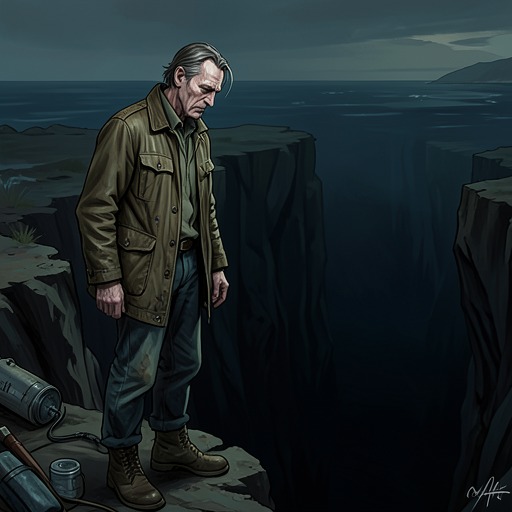
Jonas Returns to the Trench
This flow traces Jonas Taylor’s movement from a traumatized former pilot to a man who returns to the Mariana Trench to rescue Terry Taylor and confront the fears governing his life.
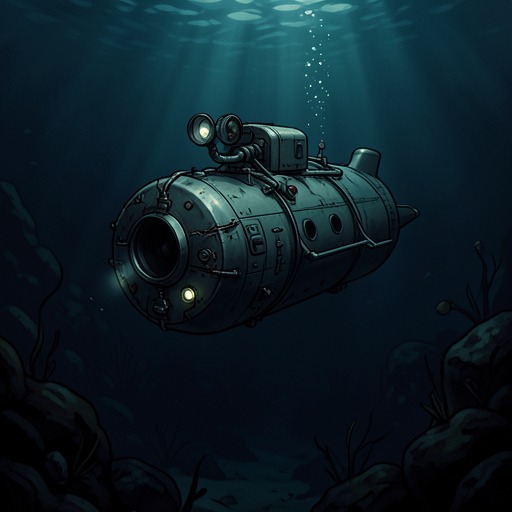
The Secret Behind the Proteus Disaster
This flow follows the hidden cause of the Proteus loss from a mysterious sonar gap to the revelation that the expedition concealed dangerous predators and a covert search.

The Secret Fusion Mission
This flow traces how a legitimate seismic survey conceals Benedict Singer’s effort to locate rare manganese nodules and monopolize a transformative fusion fuel.
